
This net revenue is similarly grouped under “Other Income” or “Miscellaneous Revenue” to maintain a clean presentation. Cash short is categorized as an expense, reflecting a loss, while cash over is recorded as income, indicating excess cash. Accurate categorization is crucial for true financial performance representation. Management must enforce a clear policy prohibiting employees from keeping personal cash within the register drawer. This separation prevents commingling of funds which often complicates reconciliation and obscures the true source of a variance.
Time Value of Money

The use of a dedicated log or report is also essential for tracking recurring issues. The account Cash Short and Over provides a way to monitor employees’ cash handling proficiency. From the small arrow ▼ icon in the Received cash short and over is From column, select Cash in Drawer. From the small arrow ▼ icon in the From Account column, select your shortage or overage account.
- This is because they involve with cash sales that currency changes are required.
- Conversely, when the account carries a net credit balance, representing an overage, it functions as a revenue account, akin to miscellaneous income.
- A negative result represents a cash short amount, while a positive number represents a cash over amount.
- The cash-over-short account serves as an essential tool for detecting problems in financial reporting and accounting procedures by documenting instances where cash levels do not align with recorded transactions.
- For example, if the POS register tape indicates a balance of $1,500, but the physical count reveals only $1,492, the difference of $8 is considered a cash short.
- For employees that are working the register it should come as a relief because they don’t have to worry about being falsely held accountable for someone else’s mistake.
- By prioritizing the prevention of cash over short occurrences, businesses can maintain accurate financial records, preserve their investor base, and safeguard their corporate reputation.
What is Overbanking in accounting?
It is typically closed directly into the Income Summary account, which then feeds into Retained Earnings. Its balance is reset to zero at the close of each accounting period and is typically grouped under Miscellaneous Revenue CARES Act or Miscellaneous Expense. For employees that are working the register it should come as a relief because they don’t have to worry about being falsely held accountable for someone else’s mistake.
Accounting Ratios
- Therefore, the balance of cash short and over is on debit or credit depends on whether it is shortage or overage.
- Let’s take a look at an example of using the cash over and short account.
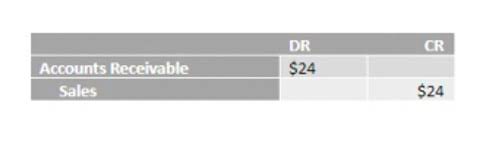
- For example, if sales were recorded as $500, but only $498 was counted, the journal entry requires a debit to the Cash Short and Over account for the $2 shortage.
- Cash over and short plays an essential role mainly in retail and banking industries where handling large amounts of cash is commonplace.
- This net expense is typically grouped under the “Other Expenses” or “Miscellaneous Expenses” section of the Income Statement.
In accounting, cash over and short journal entry is usually made when the company replenishes its petty cash fund. This is due to the cash remaining and the receipts in the petty cash box may not equal the amount of petty cash fund established. Cash short and over refers to discrepancies where physical cash does not match recorded amounts. It impacts businesses by affecting financial accuracy and trust, necessitating regular reconciliation to maintain integrity. In financial management, cash short and over is categorized as a miscellaneous expense or income, depending on whether it is a shortage or an overage.

Regular cash reconciliation is vital for businesses to maintain accurate financial statements and uphold financial integrity. Over and short—often called “cash over short”—is an accounting term that signals a discrepancy between a company’s reported figures (from its sales records or receipts) and its audited figures. The term also is the name of an account in a company’s general ledger —the cash-over-short account. The mechanics of recording cash discrepancies involve a direct offset to the main Cash account. When a cash shortage occurs, the company’s actual cash balance is lower than the recorded sales. For cash overage in petty cash, we can make the journal entry with the Accounting For Architects debit of the expense accounts and the credit of the cash over and short account and the cash account when we replenish the petty cash.